Dog Food and Supplies
One Pack. One Family.
Poodlewohl exists to make that bond between you and your dog visible — the one where you take care of each other.Poodlewohl exists to make that bond between you and your dog visible — the one where you take care of each other. When we launched the brand, the brief wasn't to sell another line of dog products. It was to show something people already feel but rarely see spelled out: that caring for a dog is mutual, not one-directional. I led the visual design with my team — a modernized logo, a natural color palette, and a set of handmade illustrations built specifically to show that everyday give-and-take between dog and owner. Nothing about the imagery is generic pet-brand stock; each piece was drawn to capture a real moment of that relationship. The result positions Poodlewohl less as a company selling to dog owners and more as part of that relationship itself — close to the daily life it's depicting, not separate from it.
Art Direction / Rebranding & Brand Expansion


Reduced to what matters
The old logo packed in too much at once: circle, drop shadow, two animal icons, a claim curved underneath – the wordmark itself got lost in the noise. The redesign strips away everything that isn’t the wordmark and lets “Poodlewohl” carry the whole thing. The handwritten line stays loose and a bit imperfect on purpose, because it matches the illustration style and shouldn’t look mass-produced – for barf food, that’s not a style choice, it’s the message.


Person and dog, equal footing
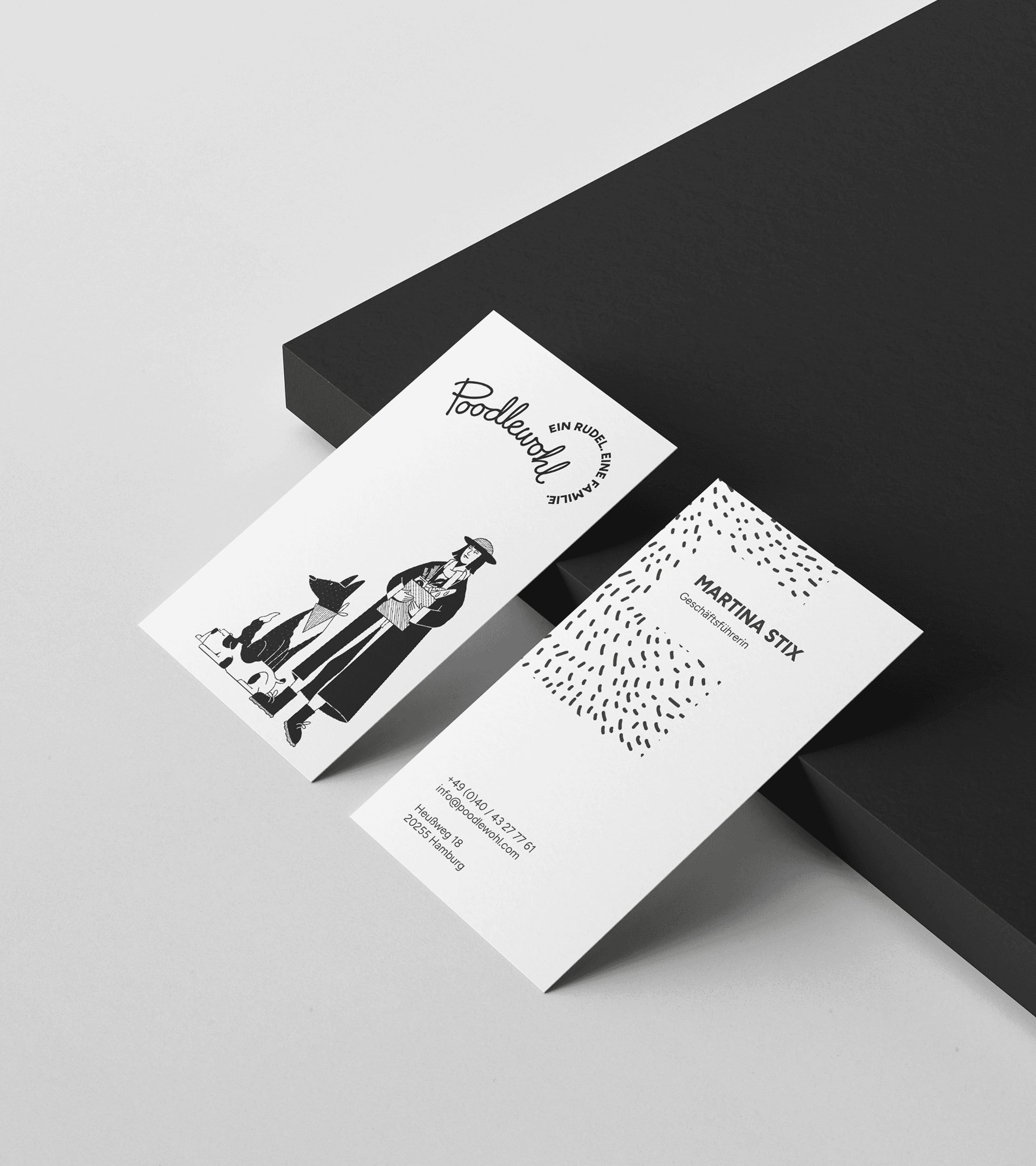
Each illustration shows a person and dog (or dogs) as a team – never just the dog as the one getting fed, never just the person as the one buying. Both stand on equal footing in the image, because Poodlewohl is built around shared attentiveness, not a one-way care relationship. Every character pairing represents its own food or snack category and becomes the main motif on that product’s packaging. The style stays black-and-white with clean linework, with details placed deliberately – hairstyle, clothing, coat pattern – so each team gets its own character without tipping into randomness.


The illustration carries the design
The packaging layout stays deliberately restrained so the illustration carries the design. A white background gives contrast to the black linework and to the accent color – the second identifying element, which sorts each product into its category: soft tones for snacks, bold colors for canned meals. The color circle in the background is never placed at random – it always wraps around the person and the dog(s) together, visually repeating the one thing Poodlewohl is actually about: the bond between them.


Patterns with an origin
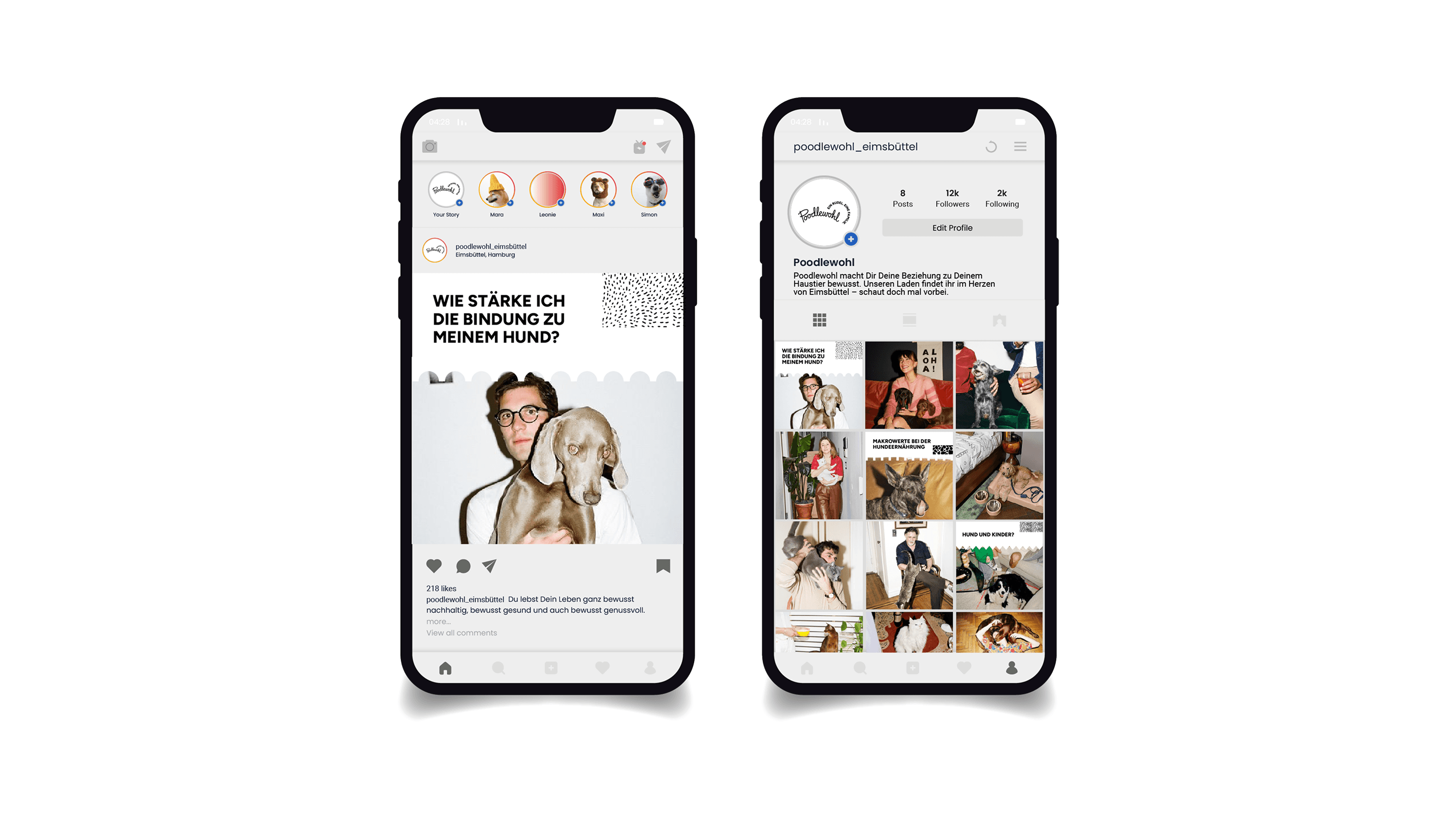
The textures are the third design element in the system, secondary to illustration and color. Every pattern comes straight from the dogs’ coat markings – dots, spots, speckles – so the surface itself ties back to the animals. It’s used on assets like shipping boxes and hangtags, where each pattern aids recognition while still giving the system enough variation to avoid feeling repetitive.